Mountain View Seed Lab’s 30-year-old computer was losing samples. For a family business built on trust over 42 years, that was a problem they couldn’t ignore. The Montana lab processes 12,000 seed samples annually for 2,000+ farmers across the Northern Plains. Their clients depend on test results to decide what seeds to plant –and in the Northern Plains, planting windows are tight. Miss your window by 2 weeks, and you’re gambling with your entire crop. That’s when Jennifer Mitchell-Thompson knew change wasn’t optional.
“We had maybe a year, year and a half tops before we’d start losing farmers we couldn’t get back,” Jennifer Mitchell-Thompson, Mountain View’s Lab Director, told us. “My father spent 40 years building trust. I was watching it disappear one late result at a time.”
“I’d answer the phone, and a farmer would ask where his sample was,” Linda Chen, Mountain View’s Sample Intake Coordinator, told us. “I’d have to put him on hold, walk to the lab, find Marcus, check his notebook, walk back to my desk. By then, the farmer had hung up.”
“We were running a 1994 system in 2023,” said Marcus Rodriguez, Lead Lab Technician. “If that computer crashed, we couldn’t even look up sample results. No backup. We were one hard drive failure away from losing everything.”
So, they embarked on what would become the fastest lab modernization in seed testing history. Backed by Seed Tech LIMS, Mountain View accomplished what typically takes labs 9-12 months in just 90 Days, including:
- Complete migration from a 30-year-old DOS system to cloud-based LIMS.
- Launch of the seed industry’s first 24/7 farmer self-service portal.
- Real-time sample tracking accessible from any device.
- Mobile workflows that eliminated triple data entry.
The Challenge: Outdated technology blocked speed
Mountain View built its reputation the old-fashioned way–one accurate test at a time over four decades. But by 2023, their technology looked more like a museum exhibit than a working lab.
“Our system was running on DOS–software from 1994,” Marcus explained. “You can’t even hire people trained on it anymore.” Rather than testing seeds, the team spent their days managing technology failures. Every result required triple entry: Marcus wrote it in his notebook, Linda typed it into Excel, then manually entered it into DOS. One transcription error could cost a farmer their organic certification.
Worse, they were sitting on a goldmine they couldn’t access. Five years of testing history for every farmer–germination rates, disease patterns, seed variety performance–trapped in a system that couldn’t generate insights. When farmers called asking which seed varieties performed best on their specific fields, Jennifer could only guess.
April 12, 2023, 6:47 am. Jennifer’s phone buzzes. It’s Tom Bergstrom, a fourth-generation wheat farmer.
Tom’s text: “Jennifer, I’m sorry to text so early. My wheat results–I submitted April 3rd. I need to plant this week. Can you check?” She knew the answer. The test was done. 91% germination–good enough to plant. But the results were sitting in Marcus’s notebook, waiting to be typed into DOS before she could generate the certificate Tom needed.
“First thing this morning, Tom. I promise,” Jennifer responded. She knew what he was thinking: he’d already called two other labs asking about their turnaround times.
“We weren’t just losing turnaround time–we were losing the trust my father spent 40 years building,” Jennifer said.
The Specific System Failures
Their lab ran on a 30-year-old DOS system–green text glowing on a black screen from a single computer at Linda’s desk. No internet connection. When it crashed mid-season, the entire lab stopped. No one could even look up sample status until it rebooted.
Excel spreadsheets picked up the slack, with the file names like “SAMPLE_2023_FINAL-v3_USE_THIS.xlsx” multiplying across different computers. But the spreadsheets weren’t synced–Linda’s version at the front desk never matched what the lab techs had on the floor.
Paper chain-of-custody forms completed the chaos. Paperclips fell off. Copies separated from sample bags. When a farmer called asking “Where’s my sample?”, Linda had to physically hunt down the form–assuming it still existed.
The Transcription Error Story: Sarah Whitman
Sarah Whitman, an organic alfalfa seed producer, submitted a sample for purity testing. The certificate came back: 91.9% pure.
Jennifer knew something was wrong. She checked Marcus’ notebook: 99.1% pure. She checked Excel: 99.1% pure. But DOS–where Linda had manually transcribed the number–showed 91.9%.
A single transcription error.
For Sarah, it was almost catastrophic. Organic buyers demand 99%+ purity. Her buyer saw 91.9% and questioned her organic certification.
“I was furious,” Sarah told us. “This error almost cost me my certification–my entire business.”
The failures were adding up. Between 2020 and 2021, Mountain View lost six seed company accounts to competitors–$240,000 in annual revenue walking out the door.
Customer retention dropped from 96% to 87%. Their average turnaround time of 13 days lagged behind competitors doing 7-8 days.
Two lab techs quit. One specifically cited “outdated systems” in her exit interview. Marcus almost left in 2022 for a national lab “with iPads at every bench.”
“In agriculture, you either evolve or disappear. We had to modernize every touchpoint we had,”

The Solution: A modern foundation for speed, accuracy, and service
After evaluating several options, Mountain View chose Seed Tech LIMS. Here’s what made the difference:
What set Seed Tech LIMS apart:
- Cloud infrastructure that scaled during peak season without crashing.
- One unified farmer record–no more triple entry.
- Mobile-first workflows–technicians enter results once at the bench, instantly available everywhere.
- Fully managed–hosting, security, and compliance updates handled by Seed Tech, freeing the team to focus on farmers.
- 24/7 customer portal–farmers could access at 10 pm after dinner.
- Automatic compliance updates for ISTA and APHIS requirements.
Backed by Seed Tech, Mountain View Seed Lab tackled an extraordinary 90-day transformation.
“Most labs get 9-12 months to modernize because it takes time to change at this scale, so it’s unheard of to go this fast,” Jennifer explained.
Linda said, “Things don’t happen that fast—it was unreal.”
The lab system replatform and customer portal launch
Launch day. Everyone arrived at 7:30 am. Jennifer, Linda, Marcus, all the lab techs. No one said much.
The old DOS computer sat in the corner, unplugged–a museum piece from 1994 that had run their business for three decades. The screen was dark for the first time in years.
At 8:15 am, Jim Patterson walked in with barley seed. He’d been a customer since 1987.
Linda created his sample entry. The system generated a barcode. The printer hummed. Out came a label.
She stuck the barcode on Jim’s sample bag and handed it to Marcus. Marcus picked up the scanner.
BEEP
His tablet screen refreshed: “Sample #6001-Barley-Jim Patterson – Germination Test”
“The barcode scanned and the sample just appeared on Marcus’ tablet,” Jennifer said. “We high-fived like kids. That’s when I knew: We’re really doing this. This is real.”

“We finally have visibility into where samples are and what’s delayed,” Marcus said. “Getting deep into historical testing patterns is critical, but we couldn’t do that before.”
And the data entry nightmares, sample tracking chaos, and transcription error fears that used to keep them up at night? Gone.
A 24/7 customer portal enabling real-time sample tracking
“At the time, we weren’t serving the full needs of modern farmers,” Jennifer explained. “Farmers work evenings and weekends. We knew we needed something for the always-on farmer.”
That’s how the 24/7 customer portal came about.

The portal allows farmers to log in from their phone or computer and immediately access all their sample information and status based on testing already underway.
Tom Bergstrom–the farmer who texted Jennifer at 6:47 am that April morning–can now:
- Submit sample online at 9pm on Saturday.
- Track sample status while feeding cattle Tuesday morning.
- Download test results from his pickup truck.
- View 5-year germination trends for his fields.
The first Saturday after launch, Tom logged into the portal at 9:47 pm from his kitchen table and texted Jennifer: “Just submitted from home. In my pajamas. This is crazy.”
“Farmers can check their wheat sample status at 10 pm after dinner if they want to,” Jennifer said.
“I went from reactive to proactive,” Linda said. “I’m not just answering ‘Where’s my sample?’ anymore. Farmers can see that themselves. Now I’m helping them plan their testing schedules, tracking trends across seasons. It’s the job I always wanted to do but never had time for.”
The Result: A System that keeps their personal touch while enhancing efficiency
“Seed Tech is taking on the technical heavy lifting so we can focus on what we do, like delivering accurate results for farmers,” Marcus said.
“The biggest relief? I don’t lie awake at night anymore wondering if we’ll lose another sample or make another transcription error. Those nightmares just… stopped,” Linda said. “Last month a farmer called asking about a rush sample. I pulled it up on my phone while we were talking. Saw it was in the germination chamber, day 5 of 7. Before, I would’ve had to call him back after checking three different places. Now I have answers instantly.”
Tom Bergstrom got his redemption the following spring. The wheat farmer who’d texted Jennifer at 6:47 am in April 2023 submitted his samples on April 2nd, 2024. Results came back April 7th–five days. He planted April 10th, right in his optimal window. That fall, his wheat yielded 52 bushels per acre, 7 bushels above his field average. “Perfect germination, perfect timing,” Tom told Jennifer. “That’s two extra truckloads I wouldn’t have had without you.”
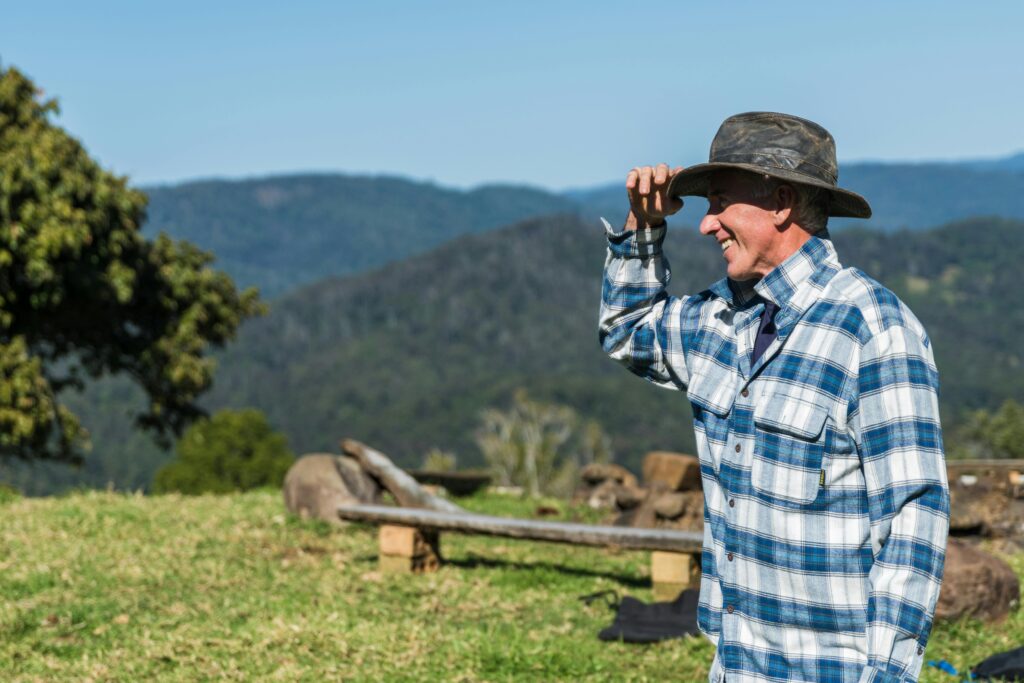
Sarah Whitman—the organic alfalfa producer who nearly lost her certification over the transcription error—became one of Mountain View’s biggest advocates. After the new system went live, she submitted three samples in 2024. All came back accurate, all under a week. She referred two other organic producers to the lab. “I trust them again,” Sarah said.
Marcus, who almost quit in 2022, is now recruiting. “Two years ago, I almost left because we were behind,” he said. “Now I’m recruiting people because we’re ahead. I show new hires the old DOS computer sitting in the corner and say, ‘That’s where we came from.’ They can’t believe it.”
“Seed Tech stays current with ISTA protocols and APHIS requirements, so I don’t have to,” Marcus said. “That’s off my plate now.”
The transformation delivered measurable results:
- Turnaround time: 13 days -> 6 days (54% faster than competitors)
- Customer retention: 87% -> 94% (recovered to near-peak levels)
- Error rate: 2.1% -> 0.3%
- Revenue recovery: $865k (2022) -> $950K (2024), representing $85K above peak
At 6 days, Mountain View now delivers results faster than any major seed testing lab in the Northern Plains region.
“It’s hard to find a technology partner where you can change your business strategy based on what they enable. But that’s where we are with Seed Tech.”